Executive Search in the Arts: Great Art Demands Great Leaders
If you asked most arts leaders how they approach hiring, especially for an executive search, you’d probably hear something like this:
“We needed to fill the position quickly.”
That’s understandable. When a key role suddenly opens up, the urgency is real. Programming must continue. Donors expect communication. Audiences still show up at the doors.
But here’s the hidden cost: speed isn’t success.
A speedy hire that doesn’t align with the culture, mission, and long-term vision of an organization can lead to serious consequences:
- Turnover: The new hire leaves in under two years, forcing the cycle to repeat.
- Stalled growth: Without the right leadership, even talented teams plateau.
- Lost momentum: Every misalignment between leader and institution sets the organization back financially and creatively.
It’s not about filling a seat. It’s about finding a leader who unlocks the potential of the entire organization.
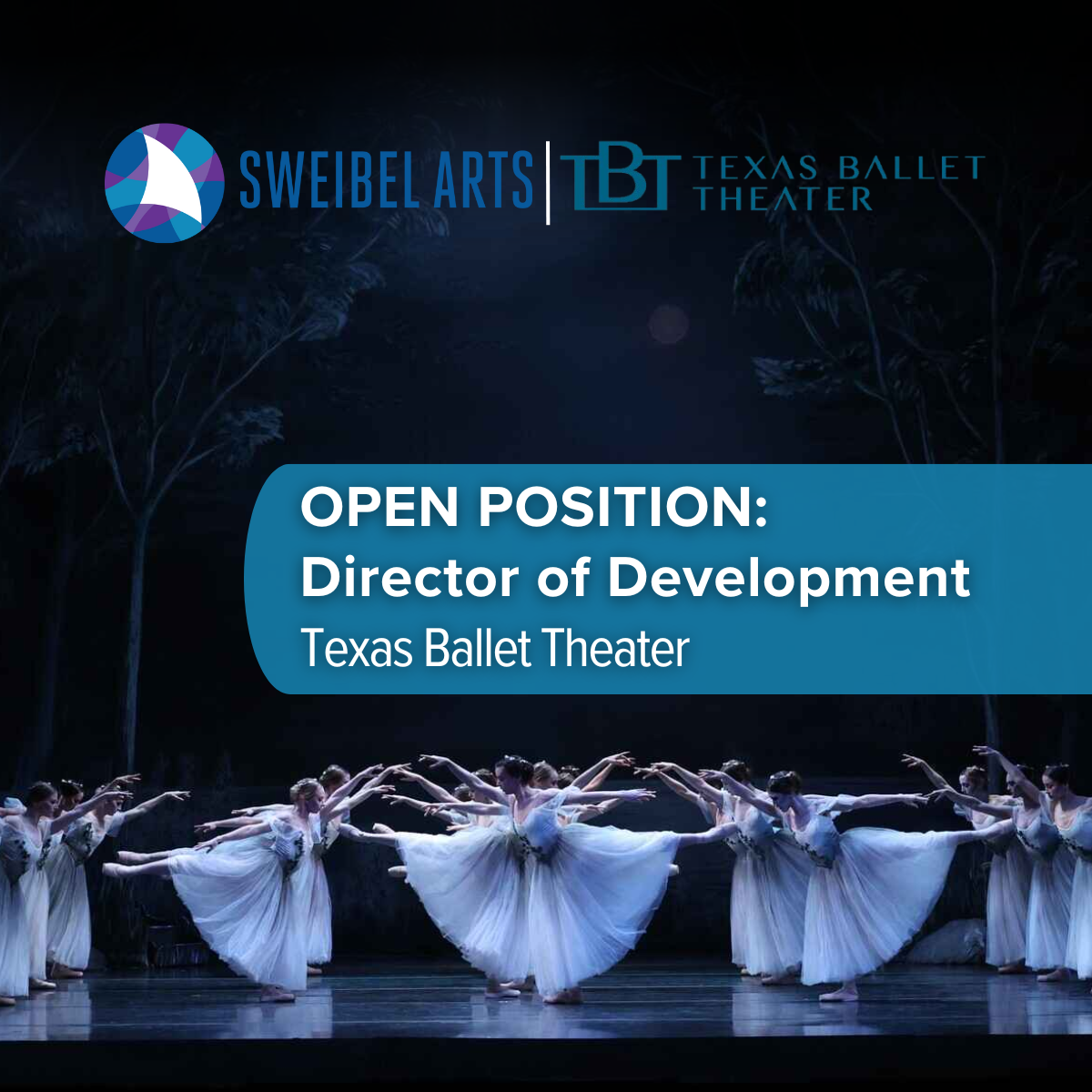
OPEN POSITION
Sweibel Arts is proud to partner with Texas Ballet Theater in the search for its next Director of Development — a leader who will help sustain and expand one of the nation’s premier ballet companies.
The Director of Development will lead a passionate team, nurture donor partnerships, and help drive the organization’s next era of artistic and institutional growth.
A Story from Goodman Theatre’s Executive Search
To illustrate, let’s look at the Goodman Theatre.
But what made that placement different from the countless other hiring processes she had experienced?
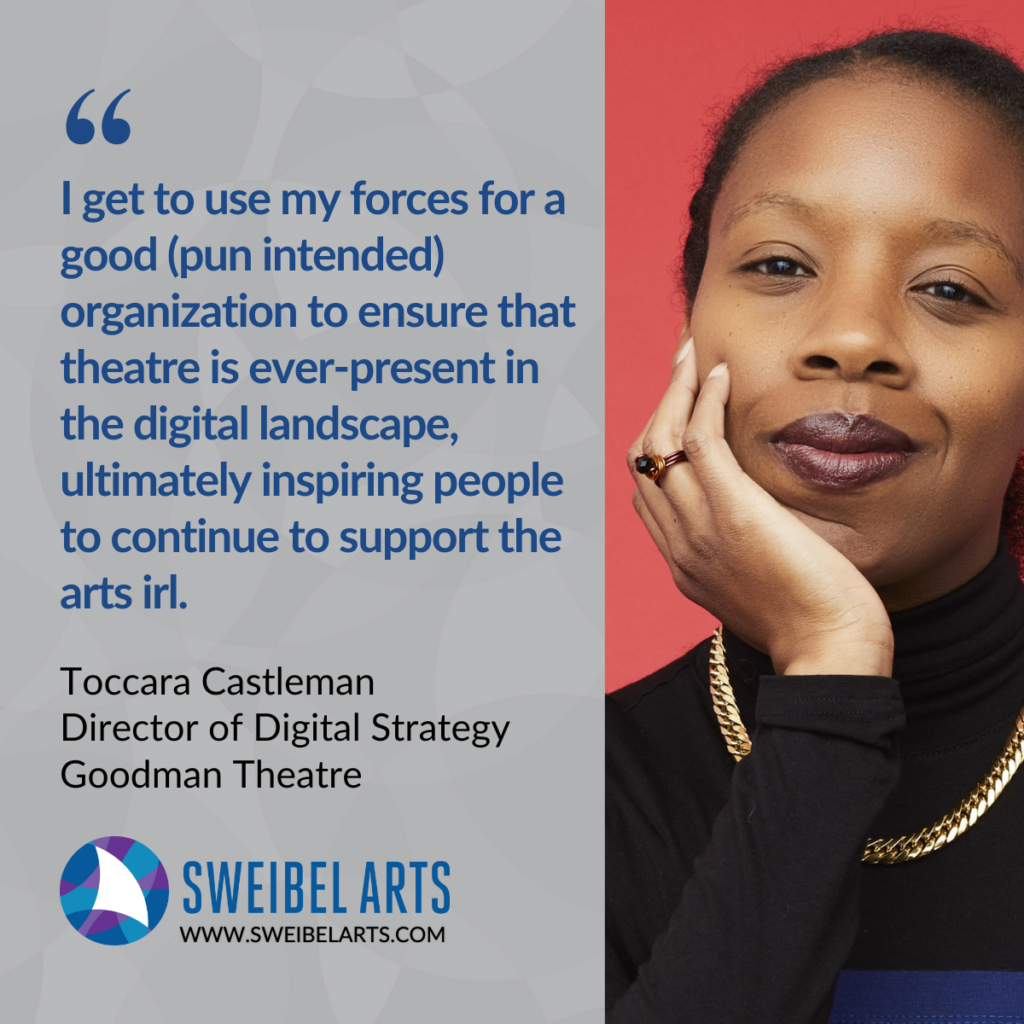
In her own words, she credited Sweibel Arts for:
Responsiveness — every step of the process was transparent and timely.
Expertise — guidance came from deep knowledge of both the industry as well as commitment to the candidate’s aspirations.
Kindness — because leadership searches can feel intimidating, but the right approach creates confidence, not anxiety.
Even more telling, Toccara noted that Sweibel Arts’ support extended beyond the interview process and into her tenure.
That’s rare.
For Robert and the crew at Sweibel Arts, the goal wasn’t simply job placement. It was about making a holistic match — aligning the needs of Goodman Theatre with the strengths, values, and ambitions of a leader who could thrive there.
That kind of fit benefits everyone:
- The institution gains a committed leader who strengthens its brand, stability, and vision.
- The professional finds meaningful work that taps into their best abilities.
- The community benefits from the flourishing of an arts organization that is well-led and future-focused.
This is why we say: great art demands great leaders.
The Hidden Stage of Artistic Success
Audiences only see what happens in the spotlight. The performance. The exhibition. The concert.
But behind every curtain call is a backstage operation: infrastructure, strategy, and leadership that makes the art possible.
- When leadership is aligned, creativity flows.
- When leadership is misaligned, even the most talented company can falter.
It’s no exaggeration to say that the quality of leadership factors in the quality of the art.
That’s why treating executive search as a “check-the-box” process is so dangerous. The real work of building sustainable arts organizations happens long before the curtain rises — in the choices that determine who leads, how they lead, and how well they fit into the larger story of the institution.
Breaking the Old Belief Executive Search
Here’s the belief we want to challenge:
“As long as someone is qualified and available, they can fill the role.”
The truth? Skills on paper don’t guarantee impact in practice.
A resume can’t tell you whether a leader will:
- Build trust with staff and board members.
- Inspire donors to see a bold vision worth funding.
- Steer an organization through both crisis and opportunity.
- Bring both rigor and empathy to the role.
Those aren’t bullet points — they’re lived qualities that speak to character. And they matter more than credentials alone.
Think of it this way: We can teach skills, but we can’t teach character. Curiosity, enthusiasm, integrity… What value are skills without any of those attributes?
So here’s the belief we want to replace it with:
“The right leader doesn’t just fill a role. They elevate the entire organization.”
That’s the shift Sweibel Arts helps organizations make.
What Makes a Great Match?
Through years of guiding arts institutions, we’ve learned that great executive placements share three qualities:
- Alignment of Values
– The leader believes in the mission as much as the institution itself does. Without shared values, even a brilliant strategist will eventually feel out of place.
- Capacity for Growth
– The leader isn’t just a fit for the current role, but for where the organization is heading in three, five, or even ten years.
- Support Beyond the Hire
– Successful placements aren’t “set it and forget it.” Leaders need guidance, encouragement, and honest feedback as they settle into the role. Unlike other recruiters, Sweibel Arts stays involved after job placement because true leadership development is ongoing.
This is the holistic approach that leads to stories like Toccara’s at Goodman Theatre.
Why This Matters Now
The performing arts sector is facing enormous challenges:
- Changing audience expectations.
- Shifting donor landscapes.
- New demands for equity, access, and sustainability.
In this environment, leadership is more critical than ever. A single strong hire can set the stage for resilience and growth. A weak one can derail an organization for years.
That’s why we believe every search must be more than transactional. It must be transformational.
Because when the right leader is in place:
- Audiences feel the impact.
- Staff are more motivated and retained.
- Donors see the results of their investments.
- Communities receive more art, more access, and more inspiration.
It all starts with leadership.
From Transaction to Transformation
The arts are too important to leave leadership up to chance.
At Sweibel Arts, we don’t just fill roles. We build partnerships that strengthen the entire ecosystem of performing arts.
Because every time a leader like Toccara thrives, an organization like Goodman thrives.
And when organizations thrive, communities thrive.
That’s why we’ll keep saying it: Great art needs great leaders.
Is Executive Search the Next Step?
If your organization is preparing for a leadership transition — whether it’s a new executive director, a marketing chief, or another key role — now is the time to plan.
Not just for who can do the job, but for who can help your organization grow into its next chapter.
Let’s talk about how we can help you find not just a qualified candidate, but a leader of great character to carry your mission forward.
→ Contact Sweibel Arts for a free consultation.